Welcome!
Welcome to the best on-line information resource for expatriates in Germany: the website of How To Germany magazine. How To Germany tells you everything you need to know about living and working in Germany as a foreigner. The magazine's feature archives are available on this website, and we update them frequently to keep you current on developments important to a happy and successful stay in Germany.
Search Our Business and Services Directory
Check out the How To Germany Business and Services Directory. There are dozens of categorized listings that include companies, churches, schools and other organizations that offer products and services to Expats in Germany. It's fast and easy.
Residing and Working In Germany
You're not truly living in Germany until the paperwork's done. Here's a quick primer on exactly what you'll need.
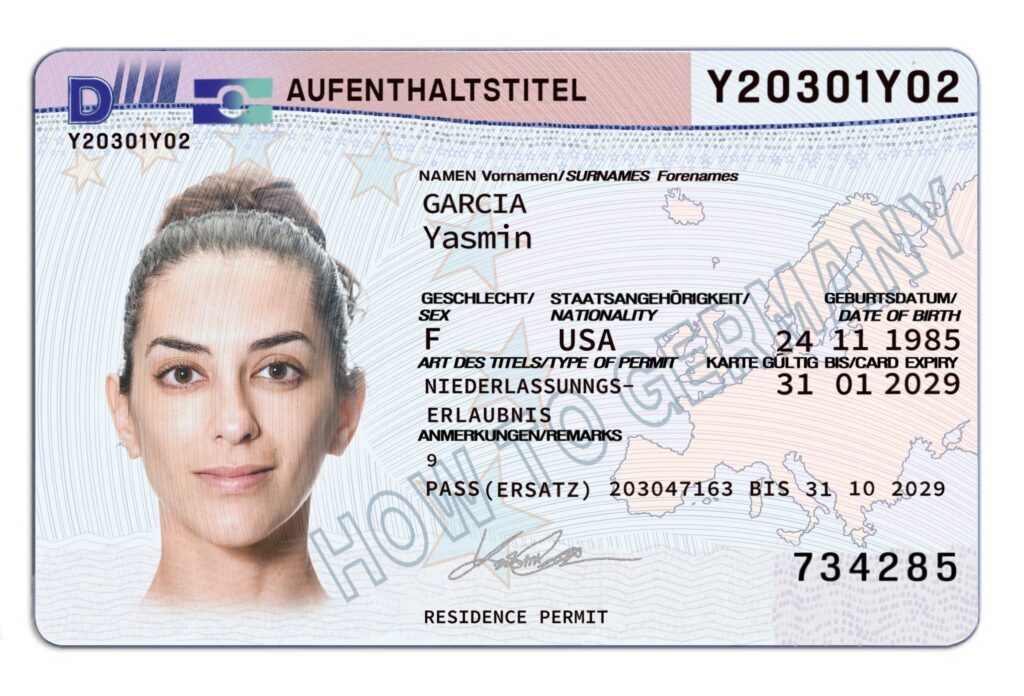
All persons remaining in Germany for longer than three months must have a residence permit (Aufenthaltserlaubnis), of which there are now two types. You can apply for one of them at the local Ausländerbehörde.
German Taxes
Know your status, both here and in your homeland.
Expatriates living in Germany can be subject to German taxes, especially if they have German source income. The German tax system is similar to the structures in other western countries. You pay income taxes throughout the year, usually with an employer deducting tax from each paycheck. Adjustments are then made at the end of the year for possible under or overpayments.
Children's Allowance - Kindergeld
Taxpaying expatriate residents of Germany are, like Germans, entitled to Kindergeld if they have children.
This is an allowance from the German government to help defray some of the cost of raising children. It can run from €164 to €195 per child per month, and is usually made by a fund transfer into a German bank account.
Bumps and Jolts on the Cultural Road
Large areas of similarity between Germans and Americans make it easy to underestimate the dangers of misunderstanding.
One of the unpleasant things about traveling are bad places in the road that cause bumps and jolts, upsetting you and knocking over your coffee. These are particularly bad when you're not expecting them. It's the same way when you're in what I call "the Transatlantic Zone" - that's any place and any time Americans and Germans are doing business together. In the Transatlantic Zone there can also be bumps and jolts when you're not expecting them. Let me give you an example.
International Schools
There are compelling reasons why you might choose to send your children to one of Germany's many fine international schools
Many English-speaking expatriates are educating their children at Germany's international schools, and an education at such a school has numerous advantages.
There is, of course, instruction in the native language. And, since the student body is usually quite international, they expose the young people to a variety of cultures. They also do a better job than most German schools of introducing the students to computers, and the program of sports and extracurricular activities is more like what they are accustomed to at home.
German School System
German public education makes it possible for qualified kids to study up to university level, regardless of their families' financial status.
The German education system is different in many ways from the ones in Anglo-Saxon countries, but it produces high- performing students. Although education is a function of the federal states, and there are differences from state to state, some generalizations are possible.
Insurance: It's the Law
In Germany, insurance isn't just a good thing to have -- it's mandatory. Here's a quick primer on what you'll need.
If you are planning to spend more than six months in Germany, or have moved here in a job-related capacity, there are some things you need to know about insurance, which is in some cases mandatory.
Driving in Germany
It's true: there are no speed limits on the German autobahns. But there are plenty of other regulations you should be aware of.
Driving in Germany can be a delight: the scenery is beautiful and the roads are well maintained. But there are many rules and regulations to observe.
Hostels in Germany - and Other Budget Accommodations
Hostels Provide A Youthful Take on Good, Clean, Affordable Accommodations. But they aren't the only budget accommodations available for travellers.
If you want a holiday in Germany, but can't quite stretch to a luxury hotel, there are plenty of clean, comfortable, affordable accommodations available all over the country. And, we are not just talking about places for young travellers only!
Expatriate Coaching - Meeting the needs of Today's Expatriate Assignment
Expatriate assignments are not what they used to be. Surprised? Globalization has changed the dynamics of such an adventure for the expatriate employee as well as for the accompanying family. While these dynamics may have changed and will continue to change and the budgets to support the employee and family may have decreased, the fact still remains that these families require assistance to successfully transition, professionally and personally, into the host culture.
That being said, the question remains: Has the support provided to the expatriate and family changed and developed in line and with the same speed with the changing dynamics of today's expatriate assignment? The answer is somewhat gray but becoming clearer.
The German Retirement and Pension System - Basic Facts
Ever since Germany established its first Social Security system in 1889, the public retirement insurance has been "pay-as-you-go", with the current pensions of the retired paid from the current premiums of the not yet retired. Currently about 85% of the work force is enrolled in the Public Retirement Insurance (gesetzliche Rentenversicherung GRV). Civil Servants, who make up about 9% of the work force, have their own pension system and the self-employed, who make up about 9% of the work force, are mostly self-insured (but are allowed to participate in the GRV.) The system is now under strain because of an aging population, reunification, unemployment, economic conditions, early retirement and other factors.
Maternity Leave and Job Protection (Mutterschutz)
Adjusting to motherhood is made a little easier if you happen to be an employed woman working for a German company. You will actually be provided mandatory time-off from work, before and after childbirth. This is revelatory news for many English speaking expats. Basically the Mutterschutzgesetz, Maternity Protection Act of 1968 was instituted to ensure that expecting mothers are not discriminated against when applying for jobs and to provide them with added protection from being dismissed from work as a result of their pregnancy or arrival of their newborn child. This law actually goes well beyond that fundamental claim and provides much more.
In order for the Maternity Protection's measures to be activated, the expectant mother, who is employed, must inform their employer of their pregnancy and the expected date of delivery. If a verbal notification isn't good enough, then a doctor's Certificate of Expected Date of Delivery is to be provided to the employer. Keep your receipt, because employers must reimburse their employees for this certificate when they request it.
Individual and Local Sports
Countless hours on a plane, living in cramped quarters out of suitcases and boxes, disrupted eating schedules and styles - these are things that quickly force expatriates to search out physical activity.
Newcomers to Germany observe Germans are very active on a daily basis, often walking or biking to a destination rather than driving. Sunday walks by extended families along forest paths are a common sight, as are parents on bicycles with small children trailing behind.